
How Radon Mitigation Works
A plain-English look at how a radon system pulls gas from beneath your home and vents it safely away.
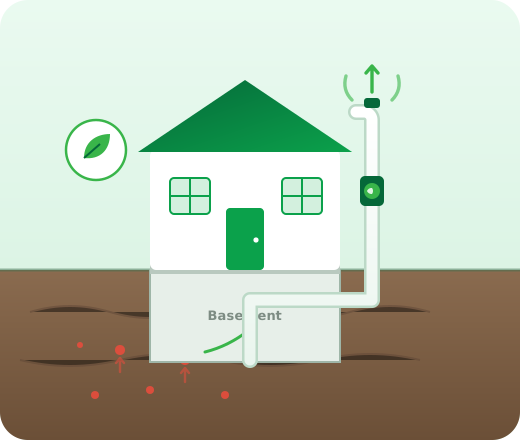
Radon mitigation sounds technical, but the idea is simple: catch the radon gas before it enters your home and send it harmlessly outside. Here’s exactly how a modern system does that.
The Proven Method: Active Sub-Slab Depressurization
Radon comes from the natural breakdown of uranium in the soil. It rises through the ground and is drawn into your home through cracks, gaps, sump pits, and the porous area beneath your concrete slab. A mitigation system reverses that flow:
- A suction point is created through the slab (or in the sump pit / crawlspace).
- Sealed PVC piping connects that point up through the home or along the exterior.
- A radon fan runs continuously, creating negative pressure under the slab so soil gas is pulled into the pipe instead of into your rooms.
- The pipe vents above the roofline, where radon disperses safely in the open air.
- Sealing cracks, the sump, and other openings makes the whole system more efficient.
The Key Parts of Your System
- Radon fan: the motor that keeps soil gas moving up and out, 24/7.
- Manometer (U-tube gauge): an at-a-glance indicator the system is pulling.
- Vent pipe: routes radon above the roof.
- Seals: close the gaps radon used to sneak through.
What to Expect
Installation typically takes about half a day, and you can stay home. Once running, a good system quietly keeps your home below 4.0 pCi/L for years. Curious what it costs? See what drives radon mitigation pricing →
Frequently Asked Questions
How long does installation take?
Will the system really lower my radon?
How much does a radon mitigation system cost?
My fan stopped working / my system is loud. Can you help?
Are you licensed and insured?
Ready to Breathe Easier?
Get a free, no-obligation quote for radon mitigation, most Central Illinois homes are done in a single day.