
What Is Radon?
A clear, no-jargon explanation of radon gas, what it is, where it comes from, and why it’s dangerous.
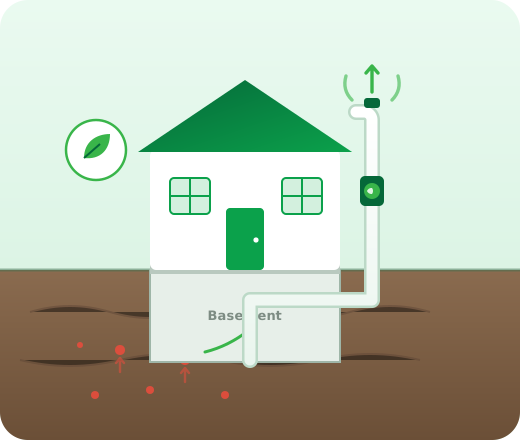
Radon is a naturally occurring radioactive gas you can’t see, smell, or taste. It forms as uranium in soil and rock breaks down, and it seeps up out of the ground everywhere. Outdoors it’s harmless. The problem starts when it gets trapped inside your home.
Where Does Radon Come From?
Uranium is present in nearly all soil. As it decays, it releases radon gas, which rises through the ground and into the air. Under and around your home, that gas is drawn indoors through cracks in the foundation, gaps around pipes, sump pits, crawlspaces, and the porous soil beneath your slab.
Why Is Radon Dangerous?
As you breathe radon, it releases tiny bursts of radiation that damage the cells lining your lungs. Over years, that damage can cause lung cancer. The EPA estimates radon causes about 21,000 lung-cancer deaths per year: making it the #1 cause of lung cancer in non-smokers and the second leading cause overall, behind smoking. Read more about radon and lung cancer →
How Do I Know If My Home Has Radon?
The only way to know is to test. Radon is measured in picocuries per liter (pCi/L), and the EPA action level is 4.0 pCi/L. You can use an inexpensive test kit or hire a licensed measurement pro. Here’s why and how to test →
What If My Level Is High?
Don’t panic, radon is very fixable. A mitigation system permanently lowers your level, usually in a single day. We’ve done it 10,000+ times across Central Illinois. See what to do after a high test →
Related Questions
Do you offer radon testing?
How long does installation take?
Will the system really lower my radon?
How much does a radon mitigation system cost?
Ready to Breathe Easier?
Get a free, no-obligation quote for radon mitigation, most Central Illinois homes are done in a single day.